Vulnerability Operations
Prioritize what is exploitable. Fix what matters first.
Observeri Vulnerability Operations ingests findings from APIs or Excel, enriches every CVE with exploit context, prioritizes with an exploitability agent, tracks SLAs, and converts the highest-impact issues into managed remediation programmes.
EPSS
Exploit prioritization
SLA
Defined remediation targets
AI
Fix recommendations
Why it matters
Vulnerability backlogs grow faster than teams can patch
Findings arrive from everywhere
Scanners, pen tests, bug bounty, and cloud tools each export their own format—leaving security teams reconciling duplicates instead of fixing exposure.
CVSS alone misleads prioritization
High CVSS scores on low-value assets crowd out CVEs that are actively exploited in the wild on business-critical systems.
SLAs exist on paper, not in workflows
Remediation deadlines are defined in policy but tracked in spreadsheets—with no aging visibility or escalation when teams miss targets.
Vulnerabilities never become programmes
Critical findings stay as ticket noise instead of structured remediation programmes with ownership, milestones, and measurable risk reduction.
What it is
Vulnerability management that runs like an operations programme
Observeri Vulnerability Operations is the operational backbone for CVE management at scale. Ingest through APIs or Excel imports, enrich every finding with CVSS, EPSS, and exploit-in-the-wild context, then let the exploitability agent and AI engine surface what to fix first—tracked against defined SLAs and converted into remediation programmes when exposure demands coordinated action.
Unified ingestion
Exploit-aware prioritization
Programme-ready remediation
How it works
Ingest. Enrich. Prioritize. Track. Remediate.
A closed loop from scanner output to managed remediation programmes—so every vulnerability is tracked, prioritized by exploitability, and closed with evidence.
Step 1
Ingest
Bring findings in through APIs or Excel
Connect scanner outputs, cloud posture tools, and assessment platforms through API integrations—or bulk-import normalized findings from Excel templates. Observeri deduplicates CVEs, maps them to your asset inventory, and keeps the register current as new scans arrive.
Capabilities
Platform features
Everything behind smarter vulnerability operations
Multi-channel ingestion
Ingest vulnerabilities through API integrations with leading scanners and cloud tools, or import normalized Excel exports from any assessment source.
Exploitability agent
An intelligent agent continuously re-scores the backlog using EPSS, exploit intelligence, and asset exposure—keeping the queue aligned to real attack risk.
SLA programme management
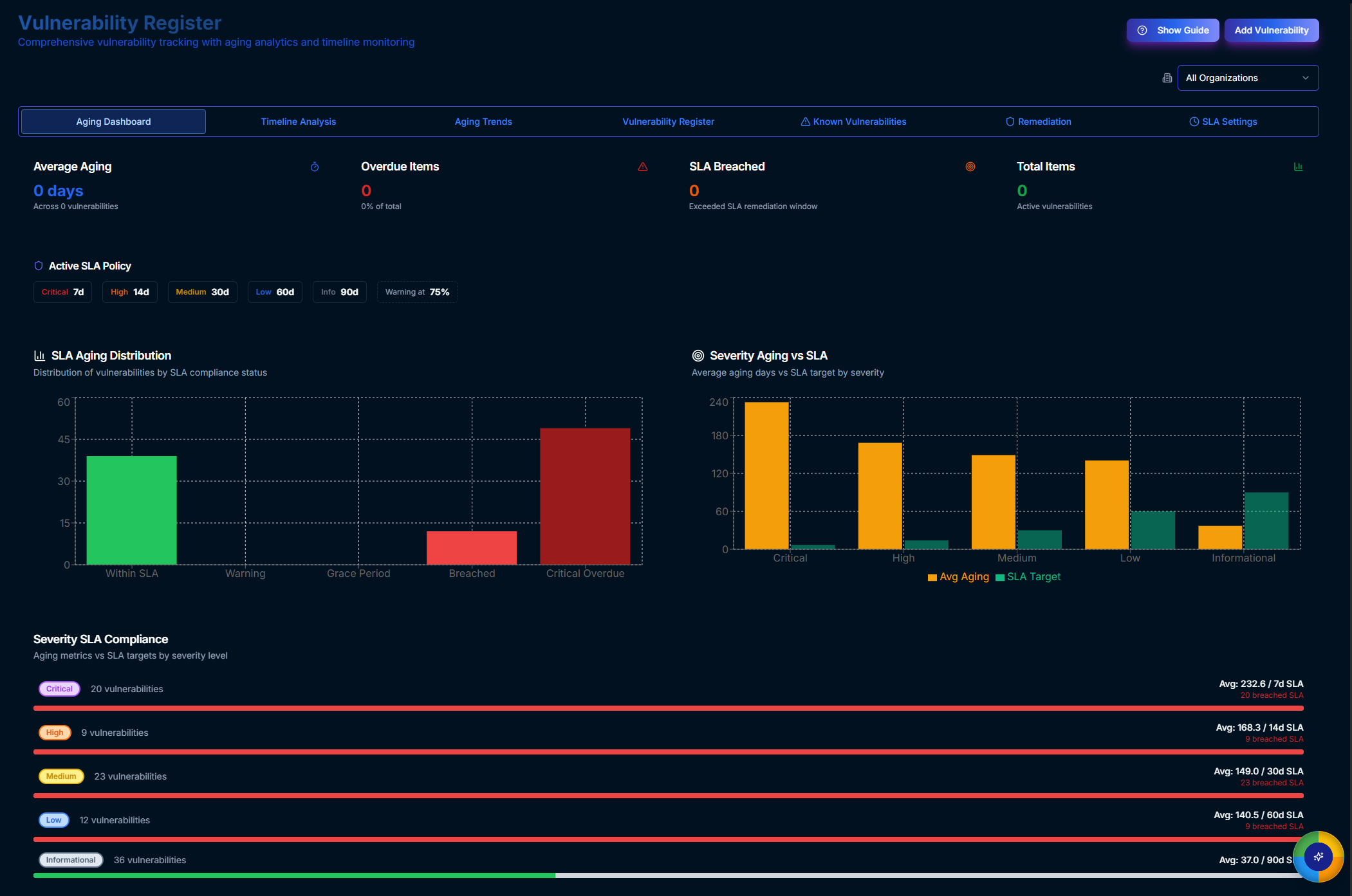
Define remediation SLAs by severity and asset class, then track every finding against its target with automated escalation when deadlines slip.
AI remediation advisor
Observeri AI suggests fix paths, compensating controls, and prioritization rationale—so engineers spend less time researching and more time closing gaps.
Remediation programme conversion
Elevate related vulnerabilities into coordinated remediation programmes with owners, milestones, and measurable risk reduction outcomes.
Program health analytics
Leadership dashboards show patch velocity, SLA adherence, exposure trends, and backlog health—so vulnerability management becomes a measurable programme.
Benefits for your organization
From vulnerability noise to measurable risk reduction
Shrink the backlog that actually matters
Stop chasing thousands of theoretical highs. The exploitability agent surfaces the CVEs attackers can leverage on your most critical assets—so effort goes to real exposure reduction.
Unify fragmented scanner outputs
API and Excel ingestion brings every finding into one register linked to assets—eliminating duplicate tickets, conflicting severities, and reconciliation overhead across tools.
Make SLAs enforceable, not aspirational
Defined SLA rules with aging alerts and breach dashboards give teams accountability and give leadership visibility into whether remediation commitments are being met.
Turn fixes into programmes leadership can track
Converting vulnerabilities into remediation programmes connects patch work to risk reduction metrics—so security investment is justified with measurable outcomes, not ticket counts.
Faster mean time to remediate critical exposure
Teams start each day with an exploitability-ranked queue and AI-guided fix paths—cutting research time and accelerating closure on the vulnerabilities that matter most.
Audit-ready vulnerability governance
SLA tracking, evidence-linked closures, and programme milestones give auditors and regulators a defensible record of how the organization manages known exposure.
Continuous exposure reduction, not periodic clean-up
As patches land and programmes close, asset risk scores and exposure trends update automatically—giving the organization an always-current view of residual vulnerability risk.
Platform capabilities
Enterprise-grade vulnerability operations
- API-based ingestion from vulnerability scanners, cloud posture tools, and assessment platforms
- Excel and CSV bulk import with field mapping and deduplication against existing CVE records
- CVE tracking enriched with CVSS, EPSS, and exploit-in-the-wild intelligence
- Exploitability agent for continuous priority re-ranking based on real attack risk
- Configurable remediation SLAs by severity, asset tier, exploitability band, or team
- SLA aging dashboards with near-breach and overdue alerting
- AI remediation recommendations with patch paths and compensating control suggestions
- One-click conversion of vulnerability clusters into Focused Remediation programmes
- Team-based priority queues organized by ownership, severity, and SLA status
- Program health analytics for patch velocity, backlog trends, and exposure reduction
Quantified outcomes
80%
Faster critical prioritization
60%
Less manual triage effort
100%
SLA-tracked findings
24/7
Exploitability re-scoring
Connected modules
Vulnerability Operations feeds directly into Observeri's Asset Management, AI Risk Operations Center, and Focused Remediation modules—so patch work updates asset risk scores, informs enterprise risk registers, and flows into programme management without duplicate effort.
Stop patching blind. Start fixing what is exploitable.
Ingest vulnerabilities through APIs or Excel, let the exploitability agent prioritize your queue, and convert critical findings into remediation programmes your leadership can measure.